


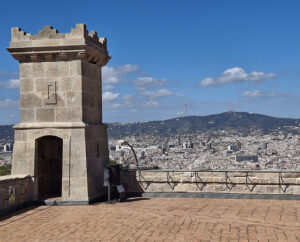


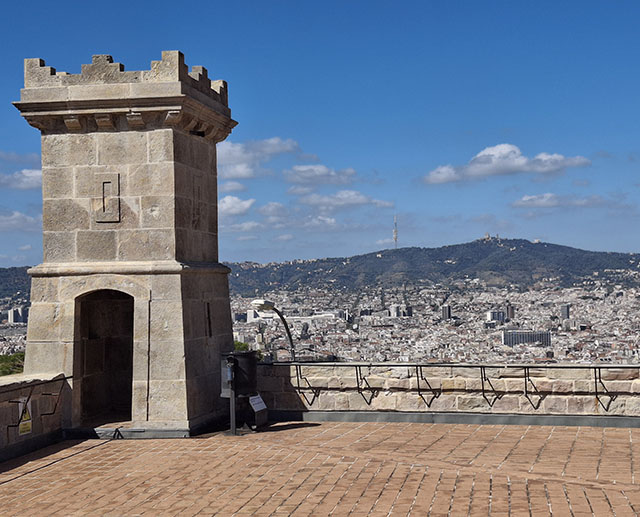
Montjuic Castle not only commands stunning views over Barcelona, but it is also a vital part of the city’s colourful history, having been the setting for numerous bloody episodes throughout its 400-year history.
“This fortress is to Barcelona what the Bastille was to Paris or the Peter and Paul Fortress to Saint Petersburg,” wrote journalist Joseph Kessel of the castle in 1956.
Montjuic Castle has been used to bombard the city of Barcelona on a number of occasions, brutally suppressing popular uprisings and revolts. One of the most famous periods for this was between 1842 and 1856, when growing tension with Madrid – as well as economic hardship – saw multiple attempts to topple the regional government.
You can learn all about this, as well as other events during the history of Montjuic, in one of several exhibitions that are displayed within the rooms of the castle.
The first fortifications of the castle were built in the mid-17th Century, but long before this the strategic importance of the mountain has been clear. There was a watchtower on the hill at least as far back as 1073.
What to expect
Definitely come for the views. You can take these in without even buying a ticket. The perimeter of the castle is free to explore.
If you enjoy history, we would definitely recommend venturing inside the building as well. There are a series of museums and galleries within the structure. Some of these are permanent, documenting the history of the castle and environs in an engaging and informative way. Others are temporary, and likely to change from time to time.
The interior isn’t terribly big, and you could probably visit all of the exhibitions within one or two hours.
There is a lovely courtyard within the castle, sporting a small cafeteria and an ice-cream truck. If the weather is fine, it is lovely to sit here and relax in the sunshine. Prices are very reasonable and the quality is not bad for a tourist destination.
Jewish connection
The name Monjuic actually comes from mons judacius, meaning ‘Jewish mountain’. In Medieval times, this is where Jews living in Barcelona were laid to rest. A Jewish cemetery under the castle was discovered in 1945. It is now known to have been used from the 9th Century onwards, until the destruction of the Jewish quarter at the end of the 14th Century.
Getting there
Getting to Montjuic by public transport is relatively straight-forward. Simply take bus 150 from Plaza España.
For a more special experience, you can also take the Montjuic cable car, which offers panoramic views of Barcelona as you approach the castle. The route starts at Parc de Montjuic. An adult single costs €10.50, a return €16.00. For a child between 4 and 12, the cost is €8.50 and €11.60 respectively.
Vital stats
This article was made possible thanks to access provided by Turisme de Barcelona. All our articles are 100% independent, and we never offer favourable coverage in return for payment or any other services provided.